
Explore Dinosaurs
Dinosaurs dominated life on land for over 160 million years. They evolved into a huge variety of forms, from small feathered hunters to plant-eaters stretching over 30 metres in length. Fossils discovered around the world allow scientists to reconstruct how they lived, moved, hunted, and reproduced.

Let’s look at the dinosaurs themselves. You can browse individual species, examine distinctive features, and explore some of the most common questions about dinosaur biology and evolution.
Dinosaur Species ›
Images and guides to individual dinosaur species, highlighting distinctive anatomy, size, and time periods.
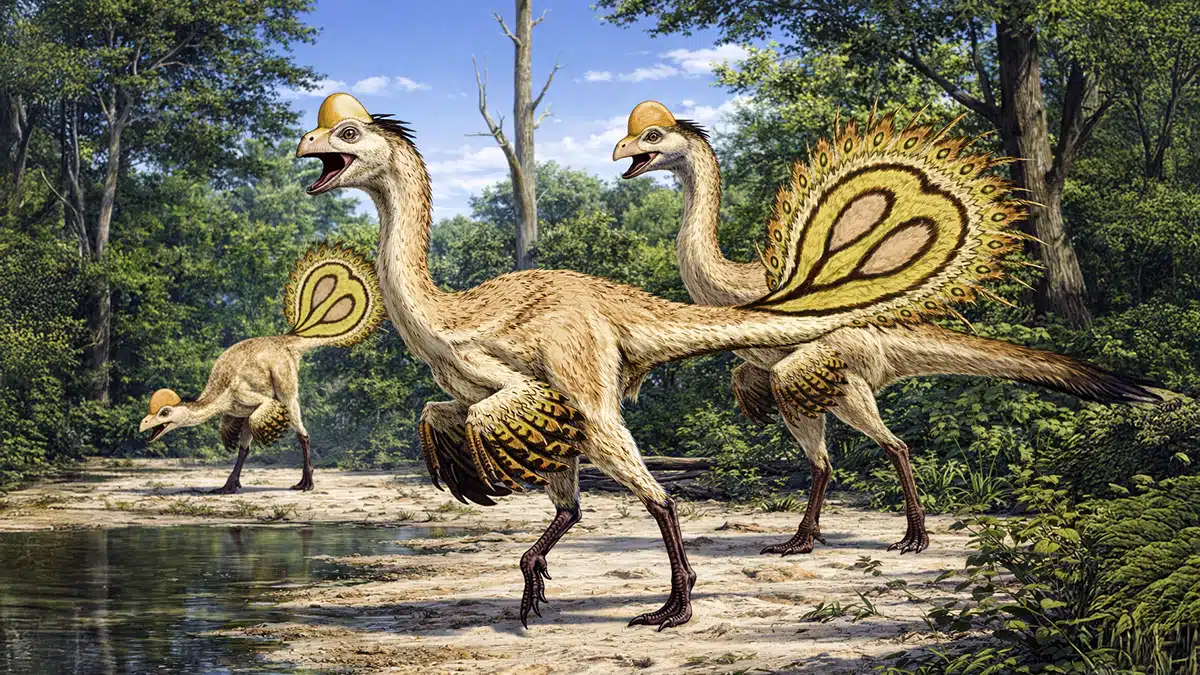
Caenagnathidae
Caenagnathidae were feathered oviraptorosaur dinosaurs from the Cretaceous of Asia and North America, known for toothless jaws.
Notoceratops
Notoceratops, a dubious dinosaur from Late Cretaceous Patagonia known from a lost jawbone and debated as a possible southern ceratopsian.


Dinosaur Questions ›
Answers to common questions about dinosaur biology, behaviour, evolution, and extinction.
Were Dinosaurs Warm-Blooded?
Dinosaurs were likely warm-blooded, according to recent research that challenges the long-held belief that they were cold-blooded reptiles.
No posts
Dinosaurs belong to a larger group of reptiles known as archosaurs, which also includes crocodiles and birds. Birds are now widely regarded as the surviving branch of the dinosaur family tree, meaning dinosaurs did not completely disappear when the great extinction event occurred at the end of the Cretaceous period.
New discoveries continue to reshape what scientists know about these animals. Fossils showing feathers, preserved skin impressions, and even traces of colour pigments have revealed that dinosaurs were often very different from the scaly creatures imagined in early illustrations.
As research progresses, the picture of dinosaur life becomes more detailed. Each new fossil site adds pieces to the story of how these animals evolved, spread across ancient continents, and eventually gave rise to the birds that live today.