
Caenagnathidae
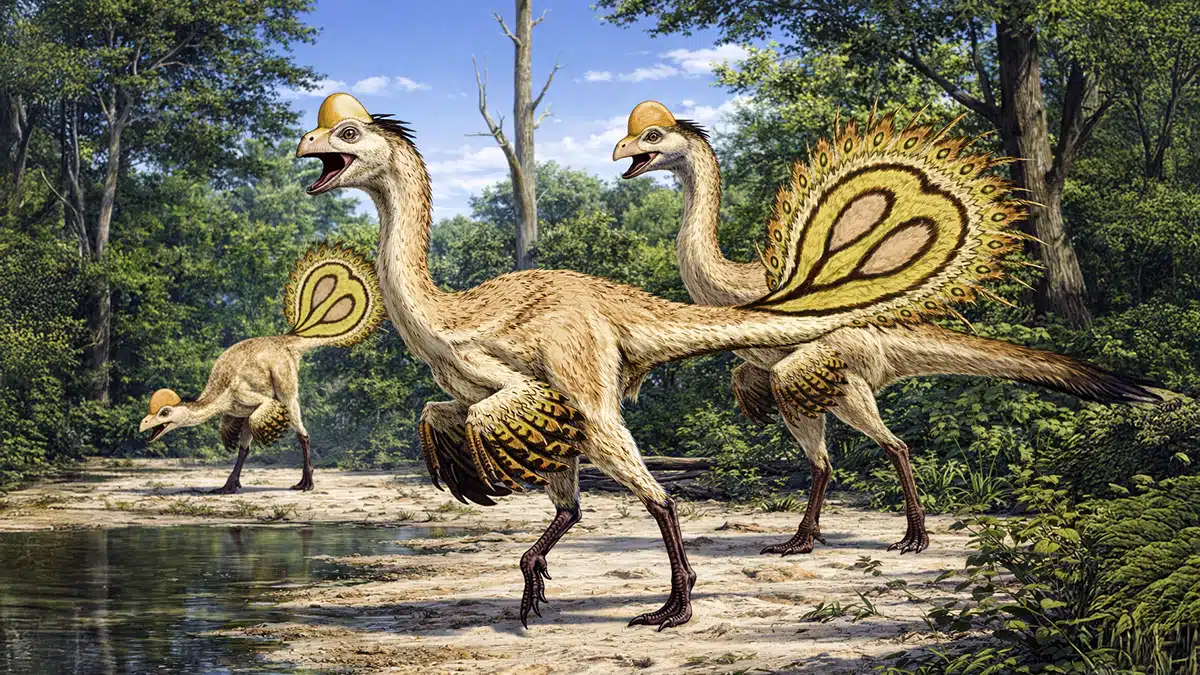
Caenagnathidae were a family of feathered oviraptorosaur theropods that lived during the Cretaceous, with fossils known from Asia and North America. Named from the type genus Caenagnathus collinsi, they ranged from small forms to giants such as Beibeilong, with the largest members reaching about 7.5 to 8 metres long.
Scientific name: Caenagnathidae (type genus: Caenagnathus; type species: Caenagnathus collinsi)
Name meaning: Recent jaws
Clade: Oviraptorosauria
Family: Caenagnathidae
Era: Mid-Late Cretaceous (Cenomanian-Maastrichtian, ~100-66 million years ago)
Length: About 0.6-8 m
Diet: Probably omnivorous
Location: Asia and North America
Fossils: Jaws, hands, feet, limb bones, skeletons, eggs, and embryos.
Caenagnathidae Life Reconstruction and Illustration

The reconstruction is based on fossil skull material and partial skeletons from caenagnathids such as Chirostenotes and related oviraptorosaurs. These fossils provide clear evidence of the long neck, shallow beak, and distinctive cranial crest. Missing elements were completed using well-preserved relatives, allowing accurate proportions for limb length, tail balance, and overall posture in a 3-metre animal.
The prominent rounded crest was reconstructed from known skull shapes in derived caenagnathids, where the crest forms a noticeable dome above the beak. Soft tissue, including feathers and body covering, is inferred from closely related feathered theropods, supported by fossil impressions in similar groups.
Key facts about Caenagnathidae
Caenagnathidae were feathered, bird-like theropod dinosaurs that lived during the Cretaceous and spread across North America and Asia. They are part of the oviraptorosaurs, closely related to Oviraptoridae, but are distinguished by their longer, shallower jaws and lighter overall build.
Here are the defining features that set caenagnathids apart:
- Toothless, elongated jaws with internal ridges and hollow spaces
- Lightweight, bird-like bodies with feathers and long limbs
- Close evolutionary relationship to birds within Maniraptora
- Wide size range, from small forms to some of the largest oviraptorosaurs
They varied widely in size, from relatively small species to giants like Beibeilong. Most were fast-moving, bipedal animals with long legs and necks, short tails, and toothless beaks. Their anatomy suggests flexible feeding behaviour rather than a single specialised diet.
What is Caenagnathidae?
Caenagnathidae is a family of oviraptorosaurs, a group of feathered theropod dinosaurs within the larger branch Maniraptora. They are closely related to Oviraptoridae but differ in several important skeletal features, especially in the jaws and overall build.
The name Caenagnathidae comes from Greek and Latin roots meaning “recent jaws.” The pronunciation is commonly rendered as see-NAG-na-thuh-day. The family includes well-known genera such as Chirostenotes, Caenagnathasia, and Beibeilong, showing that the group ranged from relatively modest species to enormous forms.
Caenagnathids shared the typical oviraptorosaur body plan in broad outline. They were bipedal, with long arms, long legs, elongated necks, and short tails. Many were lightly built, and like other oviraptorosaurs they were almost certainly feathered.
Their jaws were especially distinctive. Compared with oviraptorids, caenagnathids generally had longer, shallower, toothless jaws with internal ridges and hollow spaces. These features help define the family and explain why Caenagnathidae remains such an important group within oviraptorosaur classification.
Anatomy and lifestyle
Caenagnathids varied greatly in size. Some were medium-sized animals, while others, including Beibeilong, belonged among the largest known oviraptorosaurs. This wide size range shows that the family was more diverse in body form than a single skeleton might suggest.
Despite that diversity, their anatomy followed a recognisable pattern. They tended to be more slender and lightly built than members of Oviraptoridae, with gracile limbs and relatively mobile bodies. Their long legs suggest active movement, though not the extreme running specialisations seen in some other theropods.
The jaws provide insight into feeding behaviour. Their relatively shallow construction suggests a bite that was less forceful than that of deeper-jawed relatives. Rather than crushing tough food, they were likely adapted to quicker feeding actions, possibly involving small prey or varied omnivorous behaviour, an interpretation supported by feeding studies on related oviraptorosaurs.
Fossils and range
Caenagnathidae fossils are known mainly from the Cretaceous of North America and Asia. The family appears especially well represented in Late Cretaceous deposits, where isolated bones and partial skeletons have helped build a clearer picture of the group over time.
Important caenagnathid fossil discoveries include material from Canada, the United States, Asia, and Mexico. The Mexican finds are especially significant because they extend the known range of the family farther south in Laramidia than had previously been confirmed.
Discovery and bird links
Caenagnathids were first understood from incomplete remains, especially hand and foot bones. That fragmentary evidence led to early confusion, and some fossils were initially interpreted as belonging to bird-like animals rather than non-avian theropod dinosaurs.
Those same fossils later became important for understanding dinosaur evolution. Their three-fingered hands, bird-like toes, and fused foot bones showed striking similarities to avian anatomy. As more complete material was discovered, caenagnathids helped strengthen the link between dinosaurs and birds.