
About Dino Russ
Welcome to Dino Russ, your gateway to the ancient world of dinosaurs. Our journey is one of discovery, aimed at uncovering the secrets of Earth’s majestic creatures that roamed the land millions of years ago.

Dino Russ explores dinosaurs and the ancient world through paleontology and visual reconstruction. Fossils provide the evidence. Scientific reconstruction and artwork help turn that evidence into a picture of animals that once lived on Earth.
Articles examine dinosaur anatomy, fossil discoveries, prehistoric ecosystems, and the scientific process used to reconstruct extinct life. Many pages combine fossil evidence with visual guides so readers can see how scientists interpret skeletons, footprints, and fragmentary remains.
Dinosaur Visual Guides ›
Illustrated guides to dinosaurs showing body shape, major features, and how different species are recognized. These pages combine artwork with explanations of skull structure, posture, size, and other key anatomical details used by paleontologists.
Caenagnathidae
Caenagnathidae were feathered oviraptorosaur dinosaurs from the Cretaceous of Asia and North America, known for toothless jaws.
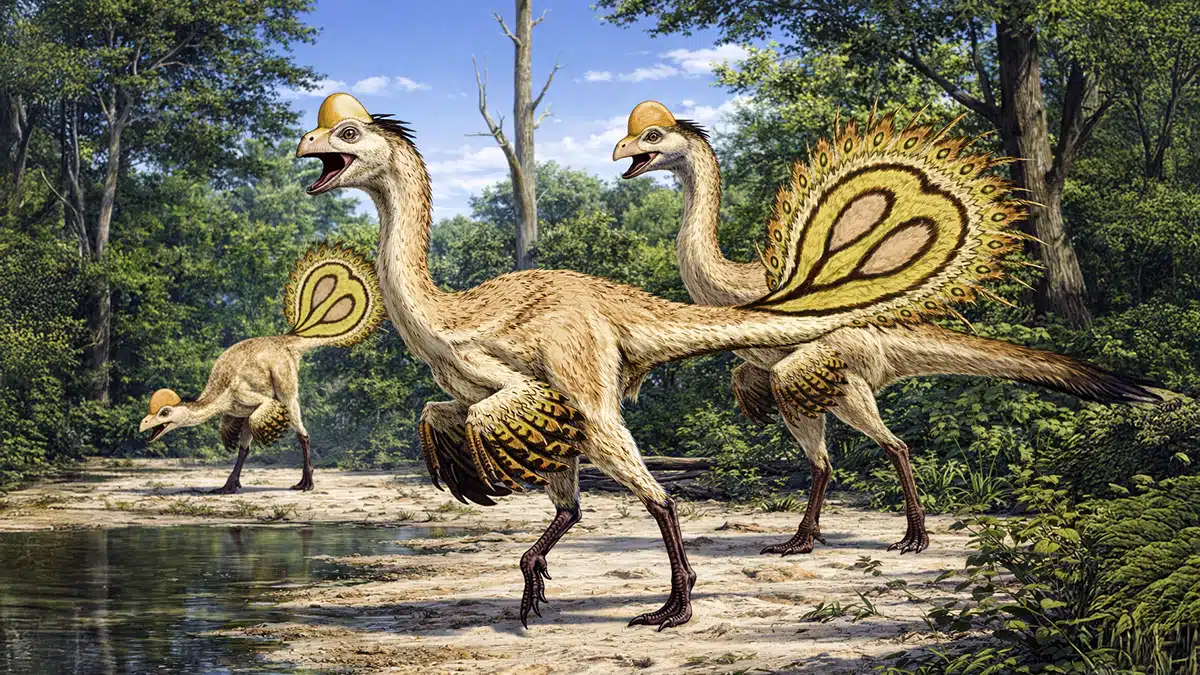
Notoceratops
Notoceratops, a dubious dinosaur from Late Cretaceous Patagonia known from a lost jawbone and debated as a possible southern ceratopsian.
Heishansaurus
Heishansaurus was a doubtful armored dinosaur from Late Cretaceous, known from fragmentary fossils and uncertain ankylosaur classification.


Dinosaur Discovery ›
How dinosaurs are found and studied. Fossil digs, excavation methods, field research, and museum preparation all play a role in turning buried bones into scientific knowledge about prehistoric animals.
Public Dinosaur Digs You Can Join
Public dinosaur digs you can join in the US and Australia, with family-friendly and expert-led fossil excavation experiences at dig sites.
Inaccurate Fossil Reconstructions and Dinosaur Mistakes
Explore famous inaccurate fossil reconstructions, from Iguanodon’s thumb spike to feathered Velociraptor and tail-dragging dinosaurs.


Dinosaur Questions ›
Answers to common questions about dinosaurs and prehistoric life. Topics include diet, movement, extinction, growth, and how scientists reconstruct behavior from fossil evidence.
Were Dinosaurs Warm-Blooded?
Dinosaurs were likely warm-blooded, according to recent research that challenges the long-held belief that they were cold-blooded reptiles.
Dinosaur Learning ›
Dinosaurs are often the first gateway into science. These pages explain paleontology concepts in clear language for students, teachers, and anyone curious about how scientists study ancient life.
Benefits to Kids from Learning About Dinosaurs
Learning about dinosaurs helps kids develop curiosity, science knowledge, and an interest in Earth history, evolution, and prehistoric life.

Ancient Plants ›
Dinosaurs lived within complex ecosystems shaped by ancient plant life. These articles explore prehistoric forests, cycads, conifers, ferns, and other plants that formed the landscapes of the Mesozoic world.
Growing Paulownia Trees in Australia
The Paulownia Tree has a lot to offer, whether the grower is a serious investor or a hobby farmer. Paulownia products include: The Paulownia tree is very fast growing and produces good quality timber in a very short period of time. Here is some helpful, well-researched information for you about this wonderful tree. Paulownia Tree…
Resources ›
Museums, paleoartists, educational material, fossil replicas, and other places to explore dinosaurs and paleontology beyond this website.
Paleo Art and Fossil Replicas
Explore the world of paleoart and fossil replicas, featuring artists and resources. Learn about unique dinosaurs like Therizinosaurus.
Dinosaur and Paleontology Resources
Discover the world of paleontology with these great resources. From an app that provides info on all known and characterized dinosaurs, to books covering various topics in the field, learn more about these ancient creatures. Encyclopedia of Dinosaurs is an app containing info on all known and characterized dinosaurs. The format makes the app suitable…

The name “Dino Russ”
Why “Dino Russ”? No special reason. It just seemed like a cool name for a site mainly about dinosaurs — short and memorable.
“Russ” is short for “Russell”, the name of paleontologist Russell Jacobson, who originally owned the domain name. Go to Dino Russ’s Lair for a little history on the old website (not ours).